|
 |
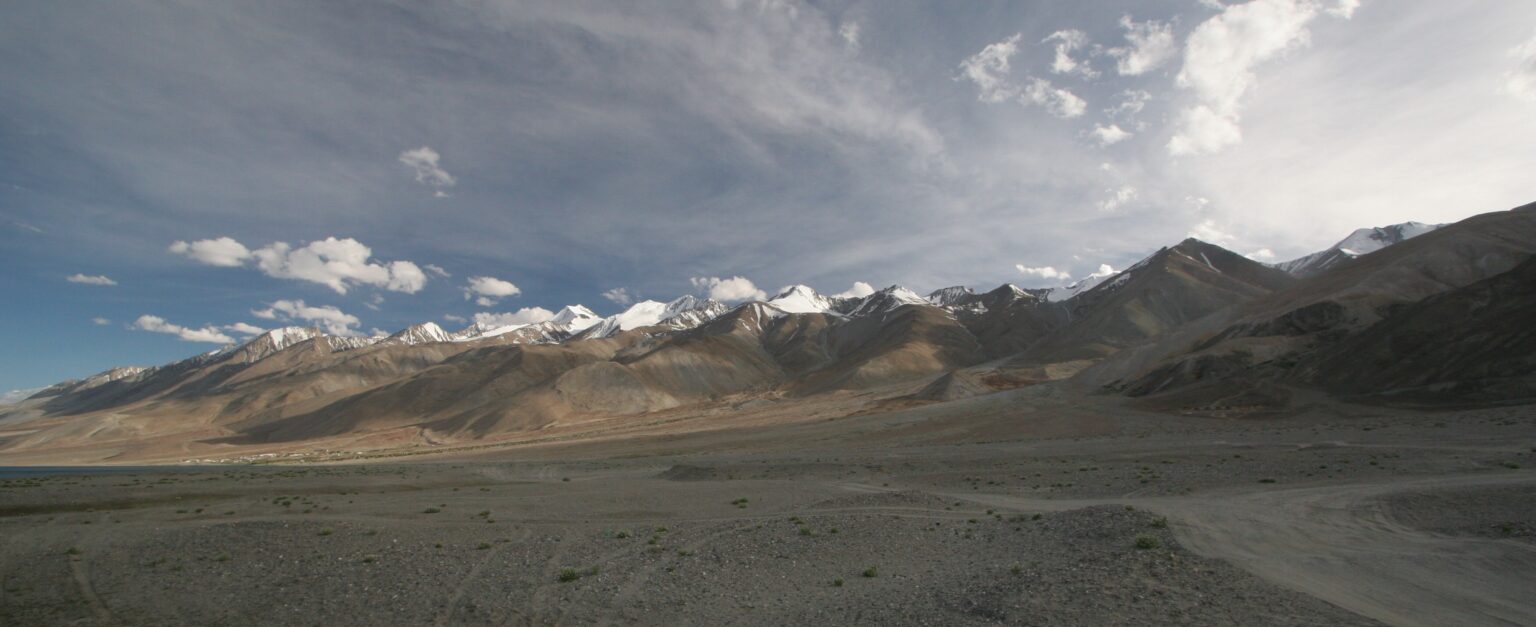
| Mountains
from plane window |
Glacier |
|
Arriving at the new airport in Nagoya, my first stop was the men's room,
where I found (some of the) stalls were not quite what I was used to (very
clean though!): |
 |
|
The next afternoon, I began my sightseeing Tokyo, stopping briefly by the
Imperial Palace grounds (where I saw very little), then walking on to the
Tokyo International Forum, then to the Ginza area for the evening: |
 |
 |
 |
| Buildings
reflected in moat |
Tokyo
International Forum ('TIF') |
TIF,
ships ribs |
 |
 |
 |
| Widest
view |
Another
angle |
Department
store crowd
at the TIF complex |
 |
 |
 |
| Ginza
(on Harumi-dori) |
Ginza |
Poster
close-up |
|
From Ginza, I headed over to Shinjuku, taking the JR (Japan Rail) Yamanote
Line (which forms a ring around central Tokyo). Shinjuku is more
youth-oriented and a happening place at night: |
 |
 |
 |
| Shinjuku |
Shinjuku
McDonald's,
girls walking |
Shinjuku
McDonald's,
guys laughing |
| The
the next morning, I took the JR Yamanote Line from my Ikebukuro
neighborhood to the Ueno neighborhood, where large Ueno Park is adjacent
to the station and the home of some major museums. In and around the
station are places to eat, shop and hang-out (even a
Starbucks). |
 |
 |
 |
| Ueno
Station |
Ueno
Station |
Ueno
Park |
 |
 |
 |
Copper
lanterns,
Ueno park |
Shop
under Ueno Station |
Japanese
billboard |
|
Another morning I set out early for the area on the west side of Shinjuku
station, a district of impressive, Western-style, high-rise office
buildings. Even though it was 7 AM on a weekday morning and the sun
had already been up for a couple of hours, the area was virtually devoid
of human activity--desolate. Among the buildings I saw were two
designed by well-known architect Tange Kenzo (the Tokyo Metropolitan
Government Building and the Park Hyatt Hotel where the movie "Lost in
Translation" was filmed): |
 |
 |
|
Tange
Kenso's (architect)
Tokyo Metropolitan Government
Building |
View
from Park Hyatt
(the "Lost in Translation" hotel)
toward Metro Government Building |
|
|
On leaving the Park Hyatt and walking back toward Shinjuku station around
9 AM, the sidewalks were packed with Japanese businessmen, wearing dark
suits, flooding out of the station toward the business district. I
would say the masses were 'swarming,' but for the fact that they actually
were rather orderly. I noticed that virtually everyone waited for
the walk sign to light before crossing the street, even when no traffic
was coming.
Needless
to say, Shinjuku station was packed, but I was able to work my way into a
position near where one of the carriage doors on the next train into the
station would be opening (trains were arriving/departing every couple
minutes). When the train arrived, doors opening, guys
were bouncing/jostling out of the car (exiting) in a steady stream of fits
and starts, like sardine pinball billiards powered
by compressed gas. Once
they were out, we flooded into the car, which, to accommodate the rush
hour crowds, had no seating. Everyone would stand, packed
tight. I considered myself fortunate, as one of the first to board,
that I could stand by one of the windows on the far side of the car, able
to see the passing scenery on a beautiful morning. I held my
briefcase between my legs until there was room to set it in front of me on
the window ledge.
By the
time we got halfway around the loop toward Ueno (again on the Yamanote
line), the car was mostly empty and passengers were sitting (apparently
the seats had been folded up against the wall during the crowded part of
the loop?). |
 |
 |
 |
| JR
car interior |
JR Yamanote Line,
as seen
through the engineer's cab |
Ueno
Station platform |
|
At Ueno station, I got the Ginza Line (subway) to Asakusa to pick up the
Tobu Nikko train to Nikko. The Tobu Nikko station was under the
Matsuya department store, where I bought a bento box lunch in the
basement. Nikko, a smallish town about an hour and a half from
Tokyo, is the home of the World Heritage-listed shrine complex of TÇshÇ-gă.
The weather was partly sunny when I left Tokyo, but by the time I arrived
in Nikko, heavily overcast . . . but, what can you do? |
 |
 |
 |
| Shin-kyo
bridge, Nikko |
5-tier
pagoda at Nikko's
Tosho-gu |
Tosho-gu
complex |
 |
 |
 |
| seated
archer |
Roof
detail |
Detail
at Taiyuin-byo |
|
The next afternoon, I happened to be in the vicinity of the Ginza Kabuki
theater, as it was nearing time for the late afternoon show to
begin. This would be a 3-hour performance, but, for the benefit of
tourists or others who don't want to commit to 3 hours, it is possible to
buy a ticket for a single act. I decided to buy a ticket to the
first act, which would last about an hour and ten minutes, standing
room only. It was warm in the theater and I was tired. The
usual elements of Kabuki were present--the white painted faces, the
voices, the instruments (especially that distinctive-sounding stringed
instrument that would be struck irregularly) and the shouting out from
audience ‘shills.’
Of course, the language of the performance was Japanese, and I didn’t
understand a word of it. There was almost no action. Virtually
all my interest in the performance was gone after 10 or 15 minutes.
I considered leaving early but resolved to tough it out for the next hour,
so as not to lose face with or disturb the Japanese audience around
me. Yet I was tired standing, shifting around, leaning on the rail
or the back wall in one posture or another. I found it very
difficult to stay awake. In fact, I nearly fell asleep on my feet
twice, once awaking just as my knees started to buckle (and catching
myself) but imagining how embarrassing it would be as an ‘uncultured
gaijin’ to pass out on the floor from sleep in the middle of a Japanese
national treasure. Finally I got up the nerve to simply walk out,
others think what they would. |
|
 |
|
|
Entrance
Ginza Kabuki theater |
|
|
After walking out, I stopped at an inviting looking
coffee bar for an exotic smoothie (Y490), which turned out icy.
Good tables with views were available, but I was self-conscious and soon
driven out by the faint but unsalutary smell of reified cigarette smoke
that pervaded the place, seeping up from the smoking room in the
basement. I finished my ‘smoothie’ on the street then began my
odyssey of finding a place to dispose of my empty cup.
There are no
trash cans on Tokyo streets, nor in the railway & subway stations (yet
the streets and stations are generally unlittered . . . I guess the
Japanese ‘pack it out’). Be that as it may, I had no desire to
put a dirty smoothie cup in my briefcase. I recalled that it
generally is easy to find public toilets in the train stations (where
there are wastebaskets). So, even though I had no other reason to
want to go down into the subway on a lovely May evening, I did. In
my tiredness or whatnot, I found no restroom. In frustration, I
nearly came to the point of abandoning my cup between planters, but I just
couldn’t do it--if the Japanese can be neat, dammit, so can I!
Finally I
considered that all the restrooms I’d seen in stations were perhaps only
to be found once having purchased a ticket and passing through the
turnstiles. I asked the station attendant who was manning the
turnstiles if there might be a place I could dispose of my cup, waving my
cup for him to see. He said "no" simply, if not curtly,
and I wondered if he understood my question. A restroom I asked, a
‘toilet’ (surely that he would understand, and every station has a
toilet). "No," he said. Could he really have
understood? I kept my eyes intensely on his face, annoyed with his
attitude and asked, "what, no toilet?" No! "None at
all?" No! I came very close to raising my voice in
outraged anger but instead simply walked away, thus, as I understand it,
not losing 'face.' Shortly thereafter, I found an appropriate place
to dispose of the cup (I don't remember where . . . maybe a
McDonald's).
The next day, I was back in Asakusa to see the Senso-ji (also known as
Asakusa Kannon), the most venerable of Tokyo's Buddhist
temples. |
 |
 |
 |
Student's
gathered in front of
Asakusa Kannon shop district |
Shopping
crowds
on the way to Senso-ji |
Shopping
crowd, four girls waiting |
 |
 |
 |
| A
proprietor with his wares |
fans |
Two
older women exit Senso-ji |
 |
 |
 |
| Entrance
arch seen from Senso-ji |
5-tiered
pagoda |
Messages
of probable
spiritual import |
 |
|
|
| Asakusa
arcade entrance, night |
|
|
|
I should say something about my lodging in Tokyo. I stayed at the
Kimi Ryokan, near the Ikebukuro station (JR Yamanote Line). Arriving
at the Kimi, I checked shoes in the rack by the entrance and signed in as
a guest (in room 305). I would say the Kimi is somewhat of a cross
between a traditional, Japanese ryokan (lodging) and a youth hostel . . .
very reasonably priced at Y4500 (about $45) a night, but somewhat lacking
in amenities. My room was very poorly lit--dark & gloomy, even
on sunny day. The showers and the bathrooms were communal.
There was no rack for hanging clothes or towels in the room, nor were
there any drawers, just 3 wall hooks . . . no wastebasket. The room
did, however, have genuine tatami matting on the floor, which I found very
nice--as warm as carpeting and as padded, in fact, nicer in it’s
firmness, and more elegant. There was some framed calligraphy on the wall,
but it was really bad . . . maybe so nobody would be tempted to
steal it. There was one sliding window shade made with rice
paper.
I had expected the staff here to be
very friendly and helpful with all the ins and outs of Tokyo and
otherwise, maybe even to spend time hanging out with guests in the lounge
or something . . . none of this was the case. On the other hand, on
my first night, after taking my shower, relaxing in my yakata, I found the
most convivial group of fellow travelers in the lounge. There was
the woman from Macedonia (earthy and reminding my of a mature hippie
flowergirl, free with her opinions, positive, enjoying the company), her
husband from Germany, and their young son (who speaks Dutch, as they now
live in Holland). There were the four ‘youth’ in the UNESCO?
student program, studying abroad in Japan . . . also very friendly and
convivial . . . two of the girls were from Indonesia (Jakarta), one guy
was from India and the other from the Philippines. I found I could
relate well with each, comfortable and relaxed and knowing something about
each of their cultures. It turned out it was the last night in town
for each of them, so we said our farewells at the end of the
evening. Back in my room, I found I had to guard against my 'worldly
wise ways' going to my head. |
 |
 |
|
The
'radio building'
near Kimi Ryokan |
The
most presentable wall in my
room at Kimi Ryokan (note bedding
on floor in lower right corner) |
|
|
Kyoto:
I took a cab
from Kyoto station to east Kyoto, where I was staying at a small,
family-run, Japanese-style inn with only 4 guest rooms (Kiyomizu
Sanso). I was genuinely relieved and delighted to see the beautiful,
traditional-style wooden housing and shops along the narrow, one lane,
stone-paved lane, Sannan-zaka, as we approached my lodging. The inn
was just a short 20 meter passageway off of Sannen-zaka!
My hostess met me at the door. She is a genuinely gracious and
friendly person, who, with limited English, made me feel warmly
welcome. She is truly well-suited to being a hostess and does a lot
of good in the world!
The inn and my room are quaint and beautiful, as befits a lodging in this
neighborhood. All of the finishings in my room are of warm,
natural materials. A good-sized window with a sliding rice paper
screen in a wooden frame looks out on a secluded driveway. The
ceiling is covered in natural, light-grained wood ceiling panels with
darker wooden cross supports, tatami mats cover the floor, and the walls
have a natural, sand-grained finish. There is one low table with
seating pads (no chairs). In one corner there is a built-in
stand/table, under which luggage can be placed. The bedding is
rolled-up (folded) in the closet, to be taken out only for evening
use. Guests were expected to make up their own beds, when the time
came.
Outside the room’s sliding, rice-paper screens, there is a regular
sliding glass window that can be opened for fresh air. The room also has
A/C if needed (it won’t be on this trip) and superb lighting–abundant
lighting is available, if one wishes, from the circular florescent tubing,
partially shrouded in a paper lantern–really rather overpowering.
I generally preferred to use, instead, only the fixture’s one dim
incandescent bulb (about one candle power) for a nice natural effect.
The seating takes me some getting used to–it can be a little hard on my
back. What I’ve found works pretty well for me as I’m typing this
journal (on my laptop) is sitting on one folded-in-half floor pad, leaning
my back up against the low stand built in to the wall, using another pad
to shield my back from its hard edge.
A full Japanese-style breakfast was served by my hostess in my room.
It always included a pot of tea, miso soup, and a small crock of rice. Along with this there would be small portions of 8 or 10
other food items, served in a bento box . . . really neat . . . quite
elegant . . . nicely presented. I would really enjoyed this and
marvel at all this being part of my lodging contract at Y6000 a
night.
As far as I could tell, Kiyomizu Sanso was run entirely by our
hostess. Being as our rooms were inside her abode (as in a
bed-and-breakfast), she would coordinate with her guests when she wanted
to do errands during the middle part of the day, as she needed everyone
out during this period when she would lock up. Guests did not have a
key to the outside door.
[Btw, though my
rooms sliding entry door can be latched from the inside at night, my
hostess told me there was no key to lock the door from the outside,
requesting that I take care to secure my valuables as I see fit. I
know theft is rare in Japan, but still, not knowing my fellow-guests,
etc., I would have felt better having a key to my room. There seemed to be
a keyhole on the outside of the latch, so I wondered why no key was
provided. Was it lost? Was it considered unnecessary?
Was it only my room that has no key or are all guests rooms the
same? I never found out.]
After getting my stuff settled in my room, I set out to explore the
delightful Sannan-zaka with my camera and the day’s last couple hours of
light. I didn’t go far, fearing I might get lost, as I’d not
brought the map the proprietress had provided (though getting lost in the
fading light might have been possible even with that map). I
stumbled onto the Kiyomizu-dera (temple/shrine?) as I wandered–it was
just closing for the day–it would be my first stop the next
morning. In the other direction, I passed a silhouetted pagoda on
the way to the busy Higashioji-dori (an avenue), where I bought a sashimi
package at convenience store for my evening meal. |
 |
 |
 |
| Kiyomizu-sanso
entrance |
My
room at Kiyomizu-sanso
with breakfast on table |
Neighborhood
pagoda |
 |
 |
 |
| Sannen-saka
stairway up |
A
place to eat |
Stairway
down |
 |
 |
 |
| Strollers
on Sannen-zaka |
A
passageway |
Roofing
'gargoyle' |
|
My first morning in Kyoto, I set off to explore Kiyomizu-dera, the
Buddhist temple and shrine just up the hill on Sannan-zaka from where I
was staying. During the Spring, many students come to see the shrine
on school trips. |
 |
 |
 |
Student's
walking to
Kiyomizu-dera |
In
the vicinity of Kiyomizu-dera |
Striking
the resonant vessel |
 |
 |
 |
| Students
posing |
Student's
leaning
to reach
the mystic falling water |
Kiyomizu-dera |
| At
Kodai-gi temple: |
 |
 |
 |
| At
Kodai-gi temple |
Worn
woodwork |
Shrine
detail |
 |
 |
 |
| Sparse
traditional interior |
Interior |
three
students pose |
 |
 |
|
| two
students |
Keith
with two students |
|
 |
 |
|
| Graveyard
at [unknown] shrine |
A
statue in a park |
|
|
Ginkaku-ji was my favorite of all the shrines and temples for its
beautiful and mindfullness inspiring landscape–the ridged sculpture with
truncated cone to aid in the appreciation of moon viewing, Japanese
gardens, tended wooded hillside paths ways, special moss. I met again
(chancing to take another picture before realizing) some of the same
students pictured earlier. Their teacher pointed out, to my surprised
memory, that we’d met earlier . . . I shook his hand in hearty greeting
. . . he and his students liked that, with gusto. |
 |
 |
 |
| At
Ginkaku-ji, a truncated cone |
reflections |
A
sculpture to aid in the viewing
of the moon |
 |
 |
 |
| A
view to an interior |
'Moon
view' stark ridges |
VIP
moss |
 |
 |
 |
| Moss
and a stump |
A
worker tends the hillside |
A
student group on the
Ginkaku-ji grounds |
|
Gion:
Gion is the section of Kyoto associated with geisha and exclusive evening
teahouses. These things do still exist, though, I think it's
relatively rarely that one spots geisha out on the street, so, I count
myself fortunate to make a geisha sighting. The three women you see
walked in a line on their high wooden sandals taking little steps in
unison, accompanied by a female 'handler.' They seemed not to take
note of their surroundings, maintaining composure, despite any possible
indignities associated with the public street and bright sunlight. |
 |
 |
|
| Gion
Geisha |
Gion
teahouse, evening |
|
 |
 |
 |
| Shop
display, food |
Interior
retail way, Gion |
Gion
Starbuck's |
| At
Kinkaku-ji (not
to be confused with Ginkaku-ji): |
 |
 |
 |
| Kinkaku-ji |
Kinkaku-ji |
Shimmering
water under eaves |
| Ryoan-ji's
famous 'dry garden' (Zen rock garden): |
 |
 |
 |
| Ryoan-ji,
'dry garden' |
Zen
contemplation at Ryoan-ji |
Ryoan-ji
people |
|
Kyoto has a marvelous new JR train station complex near the center of town
which probably should not be missed by those enjoying 21st century
shopping and amenities in Japan: |
 |
 |
 |
| Kyoto
JR station exterior |
Double-loop
at Kyoto station |
Rail
yard below |
 |
 |
 |
Kyoto
skyline with hazy peak
as seen from train station complex |
Girls
on ledge |
Iced-coffee
at sky restaurant |
| Scenes from a Kyoto
covered street arcade: |
 |
 |
|
Stairway
and screen
in arcade |
Food |
|
 |
 |
|
| Making
mini-hotcakes |
Two
girls watch |
|
| Miscellaneous scenes
around Kyoto: |
 |
 |
 |
Two
girls look out from
teahouse toward garden
at Murin-an |
Nijo-jo
grounds,
cityscape background |
Garden
outside Ninomaru palace |
 |
 |
 |
| Tree
in woods on temple ground |
Yasaka-jinja |
Breakfast
at Chitose Inn |
 |
 |
 |
| Electrical
transformer |
Pigeon |
Pigeon
fluffing |